

Chemical & Petrochemical
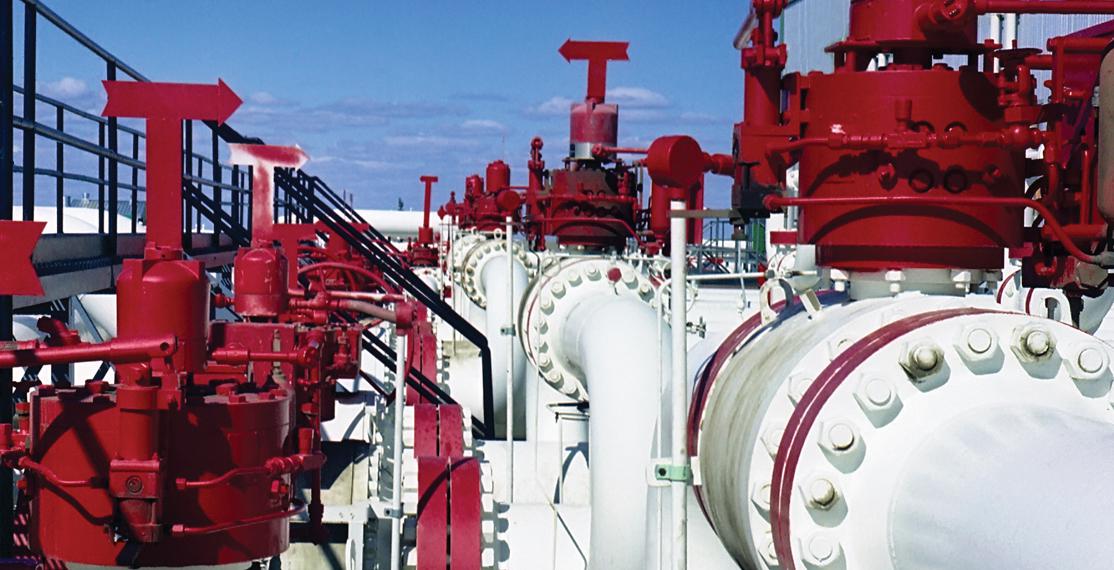
Precision fluid control in aggressive, high‑temperature, and hazardous environments. Engineered reliability from proven designs operating up to 1400°F and even highly radioactive conditions.
Unlike standard water distribution valves, chemical processing valves must withstand aggressive media attack, extreme temperature swings, and maintain leak‑tight integrity of hazardous substances — while ensuring operational continuity.
Industrial valves act as the circulatory control points in chemical plants, directing corrosive, toxic, or high‑temperature media with absolute precision. Failure can lead to catastrophic safety incidents, environmental contamination, and major production losses. Specialized shield valve technologies (extended sleeve systems) have been developed for radioactive environments, concrete installations, and inaccessible locations — enabling remote maintenance where direct human intervention is impossible.
Material selection is the foundational decision for valve service life, maintenance needs, and overall system reliability.
316 / 304 stainless — workhorse materials balancing corrosion resistance, strength, and cost‑effectiveness.
For severe conditions (chlorides, acids, alkalis): Hastelloy, Inconel, Monel, Titanium offer superior resistance in highly aggressive media.
Hastelloy® — outstanding against pitting & crevice corrosion
Inconel® — excels in high‑temperature & oxidizing environments
Titanium — supreme for chlorinated & seawater applications
PTFE (Teflon®), PFA, PVDF, PP — complete immunity to a wide spectrum of aggressive chemicals that would rapidly degrade metals.
Composite systems combine structural metal jackets with chemical‑resistant linings, isolating process media from susceptible materials. Dual‑material approach balances performance and cost.
Protective bellows shields expand/contract continuously protecting vulnerable components regardless of valve position.
Temperature ranges from cryogenic to 1400°F demand specialized metallurgies. Extended sleeve and shielded designs provide remote accessibility for hazardous zones.
Corrosion allowance, NACE compliance, and material verification are integral to chemical valve specification. Modern alloy development enables lighter, more durable valve bodies without compromising chemical compatibility.
Ball valves dominate the chemical isolation market — projected to maintain 35.6% market share by 2035. Quarter‑turn operation, reliable sealing, full‑port designs minimize pressure drop, and specialized trims accommodate aggressive media.
Butterfly valves offer space‑saving advantages, lightweight construction, and cost‑effectiveness for large‑diameter, low‑pressure chemical services.
Gate valves continue in applications requiring straight‑line flow and minimal pressure drop, though cavity corrosion between discs can limit use in corrosive chemical media.
Globe valves provide precise throttling where needed, but isolation duties are increasingly covered by ball/butterfly designs.
Control valves are the precision instruments of process automation, modulating flow to maintain temperature, pressure, level, or composition within tight parameters.
Modern chemical control valves incorporate digital positioners, smart diagnostics, and predictive maintenance that integrate with distributed control systems (DCS). They withstand corrosive, erosive, or high‑temperature media while delivering stable, repeatable performance.
Smart features: real‑time stroke monitoring, partial stroke testing, and asset management integration.
Full‑port ball valves → zero pressure drop
Butterfly valves → space & weight saving
Metal seated designs for high temperature (up to 1400°F)
Shield Valve technology provides proven extended sleeve systems that operate reliably inside concrete installations, nuclear facilities, and other high‑risk zones. These designs allow remote maintenance and actuation where human access is hazardous or impossible.
Successfully applied up to 1400°F with advanced alloy construction. Extended sleeve valve systems offer positive isolation while protecting stem seals from process media.
Leak‑tight performance even in high‑radiation zones. Specialized bellows and stem shielding eliminate fugitive emissions and extend service intervals.
Market share (by 2035): 35.6% — largest segment in chemical isolation
Growth drivers: quarter‑turn reliability, low maintenance, full‑port efficiency
Seat materials: PTFE, PEEK, metal‑seated for high temp
Digitalization of control valves with IIoT connectivity predicted to grow 8.5% CAGR through 2030.
Max operating temperature: 1400°F (760°C) — specialized alloys
Radioactive environments: Extended sleeve valves with >10 years remote service life
Corrosion allowance: Customized per NACE / ISO 15156
PTFE‑lined valves resist >95% of aggressive chemicals including H₂SO₄, HCl, and caustics.
Digital positioners with HART, Foundation Fieldbus, or Profibus PA provide real‑time valve signature analysis, predictive maintenance alerts, and reduced fugitive emissions. Integrated diagnostics lower total cost of ownership and increase plant uptime.
Engineered for chemical processing — corrosion resistance, extreme temperatures, zero leakage. Reliable isolation and control from proven designs that meet API, ISO, and ASME standards.
Previous:First
Next :Last

 English
 Chinese
 French
 German
 Russian
 Italy
Italy Spain
Spain Portugal
 Japanese
 Korean
 Arabic
 Traditional